Nexa3D polymer 3D printing technology and $55 million funding

Money Raised By NEXA3D to Commercialize Polymer 3D Printing Technology

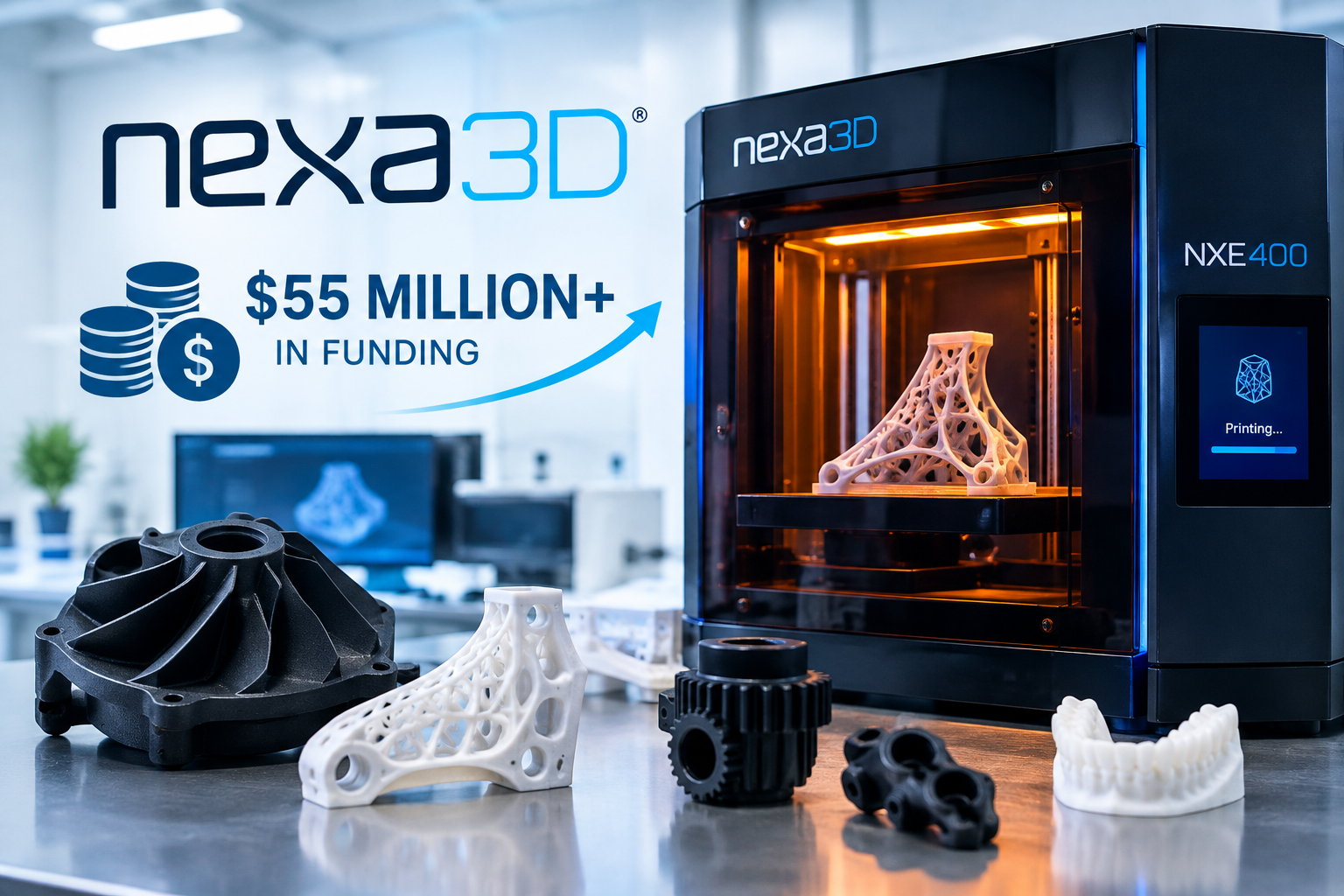
Nexa3D, the 3D printer manufacturer, has been able to raise more than $55 million in financing rounds which is led by an undisclosed “multi-billion-dollar” alternative asset manager and OurCrowd and Saudi Aramco Energy Ventures who are the existing investors.

The funds will be used by Nexa3D to fast-track the development and commercialization of a number of new polymer 3D printers along with a new class of performance polymer materials, it will also be used for the acceleration of the development of its proprietary software platform

The Co-founder and CEO of Nexa3D has said

This financing puts us in a strong leadership position to accelerate the transition of additively manufactured polymers from prototyping to production at scale. We are grateful for the enormous validation we are receiving from our customers and investors during a very challenging operating period and are deeply appreciative of our incredible team who continue to work passionately on advancing our customers’ productivity, supply chain resiliency and sustainability.

The achievement of milestones during Covid-19

The product development and commercial activities has been ramped up in this past year by Nexas 3D to achieve various significant milestones in the company’s evolution, The launch of its flagship system, the NXE 400, was the first one.

The important features of the NXE 400 is that it is a versatile and extra fast 16L industrial 3D printer that is equipped with Nexa3D’s proprietary Lubricant Sublayer Photo-curing (LSPc) which is a 3D printing technology. It has been reported that it can deliver a faster productivity up to 20x increase compared to its competitors. The printer has been brought to effect to produce custom polymer parts required for motorsport applications, along with a number of more common manufacturing tooling purposes.

With the likes of Henkel, Keystone Industries, and BASF the company has been able to form various material partnerships during the pandemic period to form an open materials model. The material library number has been expanded to 16 by Nexa3D and it has also added a wide range of supply chain-approved powder fusion plastics to its product line. This is done to open new use cases and also for the applications for its technology.

The new xCure post-processing system has been launched by the firm In October last year, for photoplastic-based parts. The system is custom-made for the NXE 400 3D printer and it is also said to be capable of post-processing parts on a production scale, the designing of it is accessible and user-friendly.

The NexaX 2.0 software platform has been commercialized by Nexa 3D after a few months to provide a comprehensive file-to-part software thread so as to extend the productivity of its high-speed 3D printers. The software has file slicing capabilities and full manufacturing execution system (MES) workflow functionality, it is also able to cover every aspect of the pre-printing setup stage so that it can optimize polymer part production.

The NXD200 has just been launched last month by the company which is its latest resin-based 3D printer, that is designed specifically for dental applications. Even this has been described as an ‘ultrafast printing engine’, the features of Nexa3D are- LSPc technology, a large build volume, and a 4K resolution LCD screen which can deliver clinic-ready dental parts at a pixel pitch of just 76.5 microns.

Reichental has said, “Despite the unprecedented and challenging operating environment, we achieved strong growth, introduced two ultrafast photoplastic 3D printers, brought a new generation of functional materials to market, added Quantum Laser Sintering capabilities to our portfolio, and attracted a top-tier leadership team,”.

Super-fast production of ultrafast polymer 3D printing

To boost Nexa3D’s manufacturing operations the funds raised which is, $55 million, will be used in order to fulfill growing customer demand the reason is that the company aims to scale its commercial activities worldwide.

Customer acquisition activities and growth in global reseller channel are also certain aspects that the company aims to achieve along with expediting several new products to market.

Several “groundbreaking” polymer 3D printers and a new class of performance polymer materials are the new products that are set to be come to the market in the near future. Along with these plans, the company also wants to continue to develop its NexaX 2.0 software platform to aid its customers’ manufacturing productivity and supply chain resilience.

Reichental also said

Industrial manufacturing technologies need refreshing; supply chains are extremely complex and fragile. What Nexa3D is building is fundamentally transforming and digitizing manufacturing. At its core, Nexa3D’s AM platform opens the door to the next generation of performance polymers that cover the entire design-to-manufacturing cycle.
Printing inks and modern printing press

Learn All About the Printing Inks Market in 2021

The research report on the Printing Inks Market provides an in-depth overview of the industry, describing the product and industry scope along with the current market status and outlook through 2027.

The report covers the overall size of the Printing Inks market for specific products and services during the forecast period from 2021 to 2027. It provides information that helps understand the potential and scope of the Printing Inks industry.

Major Manufacturers Mentioned in the Report

The report mentions the following major manufacturers and organizations in the global Printing Inks industry:

  • DIC Corporation
  • Flint Group
  • Heidelberger Druckmaschinen AG
  • National Association of Printing Ink Manufacturers
  • Sakata Inx
  • Siegwerk Druckfarben AG & Co. KGaA
  • Sun Chemicals
  • T&K Toka
  • Toyo Ink S.C. Holdings
  • Wikoff Color Corporation

Global Printing Inks Market Overview

The global Printing Inks market research report provides a fundamental overview of the industry, including its definitions, classifications, applications, and business chain structure.

The report analyzes the Printing Ink industry from two main aspects: production and consumption.

For production analysis, the report considers factors such as:

  • Production
  • Revenue
  • Gross margin of major manufacturers
  • Unit prices offered in different regions

For consumption analysis, the report considers:

  • Consumption volume
  • Consumption value
  • Sale price
  • Imports and exports across different regions

The report also provides predictions regarding the future production and consumption of Printing Inks.

Market Segmentation

The global Printing Inks market is segmented based on product type, printing process, and application.

Product Type

Based on product type, the global Printing Inks market is segmented into:

  • Solvent-based printing inks
  • Water-based printing inks
  • Oil-based printing inks
  • Other printing inks

Printing Process

The global Printing Inks market is also segmented according to printing process, including:

  • Lithographic printing
  • Gravure printing
  • Flexographic printing
  • Digital printing
  • Other printing processes

Application

Based on application, the market is divided into:

  • Packaging
  • Publication and commercial printing
  • Other applications

Key Questions Addressed in the Report

The report addresses several questions regarding the global Printing Inks industry, including:

  • What are the production, production value, consumption, consumption value, imports, and exports of Printing Inks across regions such as North America, South America, Europe, Africa, the Middle East, Asia, China, and Japan?
  • Who are the key manufacturers in the global Printing Inks industry, and what is their operating situation in terms of capacity, production, price, cost, gross margin, and revenue?
  • What are the different types and applications of Printing Inks, and what is the market share of each type and application?
  • What are the upstream raw materials and manufacturing equipment used in the production of Printing Inks?
  • What is the manufacturing process of Printing Inks?
  • What is the economic impact on the Printing Inks industry, and what are the development trends?
  • What will the Printing Inks market size and growth rate be in 2027?
  • What are the key factors driving the global Printing Inks industry?
  • What are the key market trends impacting the growth of the Printing Inks market?
  • What challenges are involved in the growth of the Printing Inks market?
  • What opportunities and threats are faced by vendors in the global Printing Inks market?

Get More Information

Buy the Report:
https://www.theinsightpartners.com/buy/TIPRE00020345/

Download PDF Sample Copy:
https://www.theinsightpartners.com/sample/TIPRE00020345/

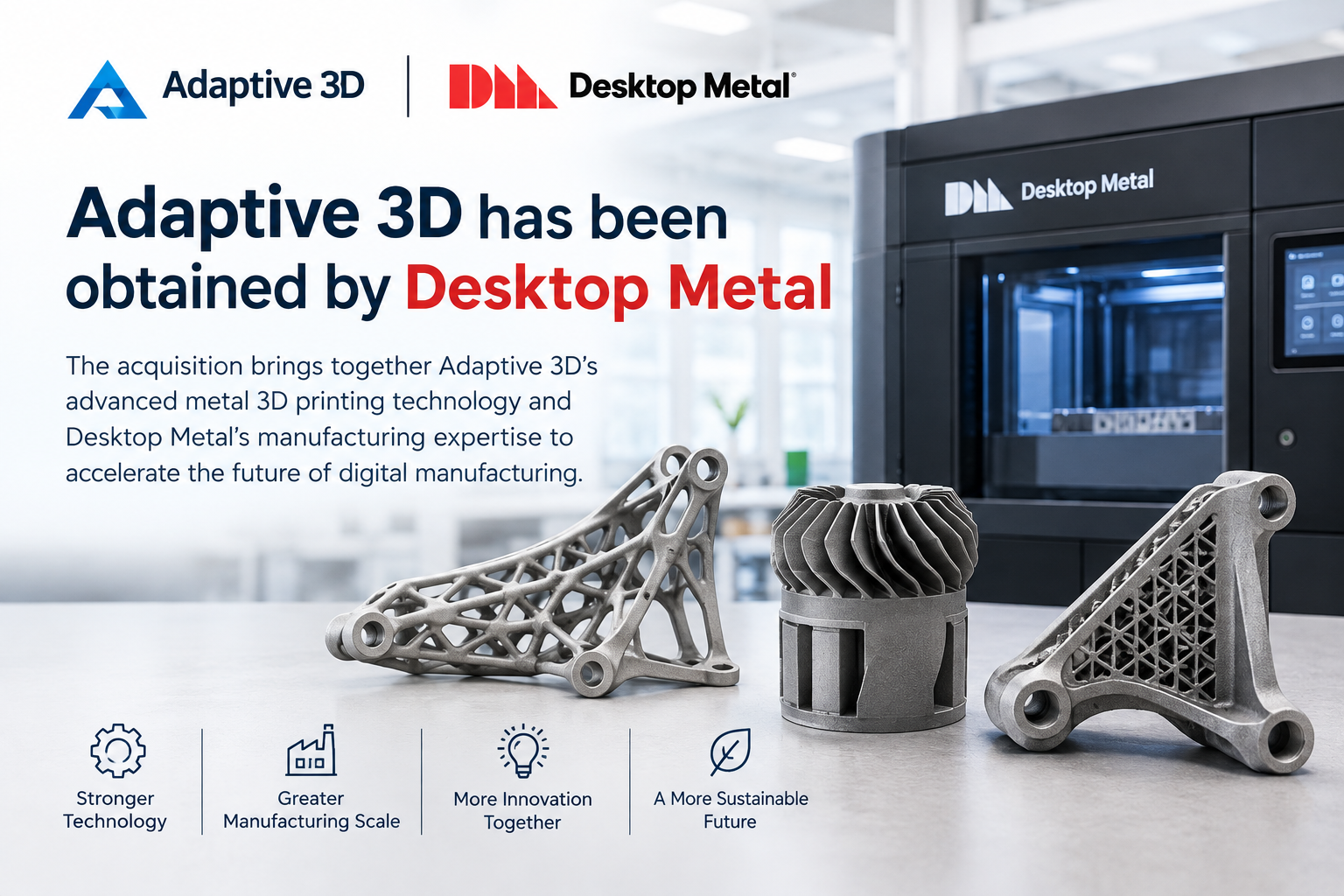
Adaptive 3D has been obtained by Desktop Metal

The shopping and expansion session post-SPAC do not seem to end with Desktop Metal. Right after the photopolymeric 3D printing leader EnvisionTEC and after the launch of the Forust service which is a sustainable wood 3D printed product, the Adaptive 3D is now taken over by Ric Fulop’s company, who is the leading provider of elastomeric solutions required for additive manufacturing.

Continue Reading Adaptive 3D has been obtained by Desktop Metal

Registration Now Open for Partners in Printing Expo 2021!

The event registration has been announced open by the Printing United Alliance, which is the most comprehensive printing and graphic arts association present in North America, along with event partner Empire Screen Printing, who is also a leading manufacturer of screen-printed products.

Continue Reading Registration Now Open for Partners in Printing Expo 2021!

The New Technology for fast 3D Lifelike Organ Printing

For the 3D printing of organ models which contains the live cells researchers at the University of Buffalo have come up with a fine-tuned use of stereolithography. The technique developed by the team is capable of printing the models 10 to 50 times faster than what the industry standard is capable, as described in the journal Advanced Healthcare Materials. This marks as a major step in the quest for the creation of 3D-printed replacement organs.

Continue Reading The New Technology for fast 3D Lifelike Organ Printing

The Expansion of Digital Printing capacity by Bolger with the new HP Indigo 100K Digital Press

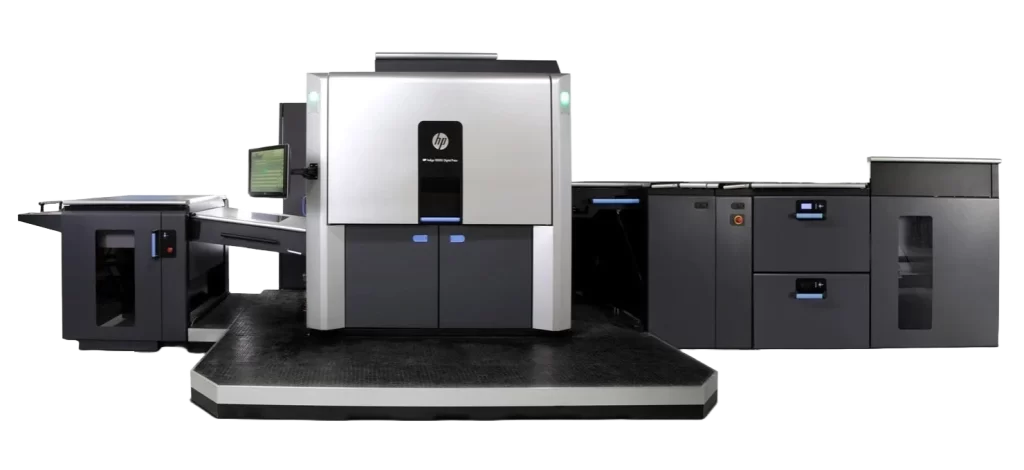
To expand digital print capacity and to support the growing demand for impactful printing applications by using personalized data Bolger Printing, they are the provider of commercial printing services, decided to invest in the new HP Indigo 100K Digital Press.

Continue Reading The Expansion of Digital Printing capacity by Bolger with the new HP Indigo 100K Digital Press

The launch of secure Printing for HP Indigo Digital Presses

The launch of the HP Indigo Secure was announced today by HP Inc. The HP Indigo Secure is promised to be a suite with never seen before security and also brand protection solutions. The reason why such solutions are provided is to protect their customers from counterfeiters and various other similar threats. The impact of such counterfeiters can reach $4.2 trillion, globally, in the upcoming few years.

Continue Reading The launch of secure Printing for HP Indigo Digital Presses

How helpful is the research report of 3D Printing Automotive market?

A microscopic summary of every aspects related to the 3D Printing Automotive market is present in the 3D Printing Automotive Market research report.  The 3D Printing Automotive industry’s growth pattern is as well analyzed in depth in the Industry study report. The market research report also consists of a detailed study of every issue relevant to the development of the industry.

Continue Reading How helpful is the research report of 3D Printing Automotive market?